

Have you found yourself Googling ‘how to stop my cat from scratching the sofa,’ or even researching anti-cat-scratch sprays? You’re not alone. It’s one of the most common frustrations for cat owners.
But before you buy that deterrent, we need to understand a simple truth: these behaviours are often not ‘bad habits,’ but direct expressions of stress or boredom.
For the modern indoor cat, life is safe, but it can also be predictable. A static, unchanging indoor environment, void of the challenges of the outdoors, can quickly become a source of chronic stress for an animal that is biologically wired to be a natural hunter.
This article is your complete guide to understanding the root causes of feline stress, identifying the hidden warning signs, and implementing a complete ‘Calming Care’ strategy—from environmental enrichment to crucial nutritional support—to restore your cat’s peace of mind and health.
Why We Must Take Cat Stress Seriously
In veterinary medicine, we now understand that feline stress is not just a passing “mood.” Because cats are masters of hiding illness, chronic, low-level stress can cause real, physical damage before an owner even notices a problem. It can manifest as painful medical conditions, skin diseases, and digestive issues.
The Red Flag: The Link Between Stress and Urinary Issues
The most dramatic example of this is the link between stress and Feline Lower Urinary Tract Disease (FLUTD). The most common cause of FLUTD isn’t infection or crystals—it’s Feline Idiopathic Cystitis (FIC), also known as “Pandora Syndrome.”
This is a condition where chronic stress triggers a complex inflammatory response that directly damages the bladder lining, making urination painful. When a cat begins eliminating outside the litter box, it is not being “bad” or “spiteful.” It is often a major health warning sign that the cat is either in pain or is associating the litter box with that pain.
The Ripple Effect: From Skin to Stomach
The physical consequences of stress don’t stop at the bladder.
- Over-grooming: Many cats use the repetitive motion of grooming to “self-soothe” when anxious. This can become a compulsive behaviour, leading to bald patches (psychogenic alopecia) and skin irritation, especially on the belly and legs.
- Digestive Upset: There is a direct and powerful connection between your cat’s gut and brain (the “Gut-Brain Axis”). Emotional stress can cause immediate physical reactions like vomiting, diarrhea, or a loss of appetite. An anxious mind can create an inflamed, upset stomach.
Decoding the Signals: 5 Hidden Signs Your Cat is Stressed
What we often interpret as “bad habits” are actually forms of communication. Your cat is using the only language it has to tell you that something is wrong in its world.
Sign 1: Destructive & Inappropriate Behaviours
- Scratching: This is not just about claw-sharpening. Cats have scent glands in their paws. When they scratch, they are leaving both a visual and an olfactory “signpost.” This is a marking behaviour. A cat that compulsively scratches furniture is often feeling insecure; it’s an anxious attempt to surround itself with its own scent to create a sense of security. This is why deterrent sprays often fail—they don’t solve the underlying insecurity.
- Inappropriate Elimination: As mentioned, this is a classic sign of urinary stress, pain, or anxiety.
Sign 2: Changes in Socializing & Activity
- Hiding: A cat that is spending more time hidden under the bed or in a closet is not being “shy.” Hiding is an active avoidance behaviour and a primary indicator of fear or stress.
- Aggression: Sudden unfriendliness, swatting, or irritability towards people or other pets is often a sign of a cat that is over-stimulated, stressed, or in pain.
- Lethargy: A lack of interest in play or interaction is easy to dismiss as “normal aging” or “laziness.” However, it can be a significant sign of depression, chronic stress, or underlying illness.
Sign 3: Abnormal Grooming Habits
- Over-grooming: Look for those compulsive, repetitive licks, often focused on the belly, inner legs, or a single spot.
- Under-grooming: This is an equally critical sign. A healthy cat is fastidious. A cat that stops grooming, resulting in a messy, matted, or flaky coat, is communicating that it is too stressed, depressed, or unwell for basic self-care.
Sign 4: Changes in Vocalization & Appetite
- Excessive Vocalization: Anxious yowling or meowing, especially at night, is often a sign of boredom, frustration, or stress.
- Appetite Changes: Stress can cause a cat to refuse food entirely. Conversely, it can also trigger “psychogenic” binge-eating, where a cat uses food for comfort, much like stress-eating in humans.
Sign 5: Posture & Body Language
- Tense Posture: A stressed cat will often crouch low to the ground with its muscles tensed, ready to flee.
- Body Language: The tell-tale signs are ears flattened to the side or back, a tail tucked tight to the body (or twitching erratically), and wide, dilated pupils.
- Freezing: This is not a sign of calm. When a cat becomes immobile and “freezes” in a stressful situation, it is an active sign of high distress.
The Ultimate Calming Care Strategy: Building a Stress-Free Environment
The key to a calm cat is not to stop them from scratching or hiding. The key is to provide them with acceptable ways to satisfy the instincts that are driving those behaviours.
Pillar 1: The Kingdom of Vertical Territory
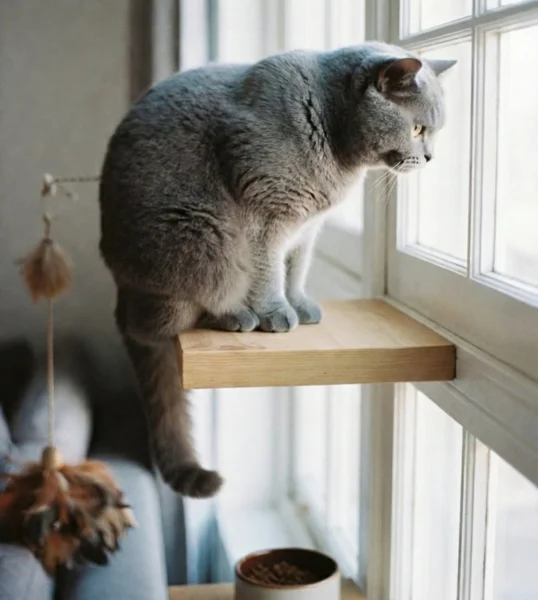
- Why: Cats are climbers. In the wild, height equals safety and control. An elevated position allows a cat to survey its territory from a safe vantage point, which is a powerful, immediate stress reducer.
- How: You must provide vertical space. This can be a multi-level cat tree, simple wall shelves, or even just a cleared window perch. The goal is to give them a place where they can look down on their “domain.”
Pillar 2: Re-Ignite the Hunter’s Instinct
- Why: This is the #1 cure for indoor cat boredom. Your cat is a “fed hunter”—just because its food appears in a bowl doesn’t mean its brain has forgotten its prime directive. This unspent predatory energy builds up and comes out as stress and anxiety.
- How (A): Interactive Play: You must simulate the hunt. This is done by following the “Hunt, Catch, Kill, Eat” cycle.
- Hunt: Use a wand toy to mimic prey. Make it move like a bird or mouse—hiding behind furniture, darting away, then holding still.
- Catch/Kill: This is the most important step. After 10-15 minutes, you must let them catch the toy. Let them pounce, “kill” it, and hold it in their mouth. This provides the crucial sense of accomplishment.
- Eat: Immediately reward them with a small treat or their meal. This completes the cycle and signals to their brain that the “hunt” was successful, leading to deep satisfaction and rest.
- How (B): Puzzle Feeding
- Turn Mealtime into Hunt-Time: The Power of Puzzle Feeders
- The food bowl is a primary source of boredom. Puzzle feeders, which require a cat to use its brain and paws to get food, are a simple and incredibly effective solution. This simple change turns a 2-minute feeding frenzy into a 20-minute mental challenge. It’s one of the most effective ways to alleviate anxiety and boredom.
Pillar 3: Provide Security & Routine
- Safe Spaces: A stressed cat’s first instinct is to hide. Instead of being frustrated by it, empower it. Provide acceptable, safe hiding spots. A simple cardboard box or a “cat cave” bed is a scientifically-proven stress reducer. A famous study at the University of Utrecht found that shelter cats given a simple box to hide in adapted faster and showed significantly lower stress levels than cats without one.
- Consistent Routine: Cats are creatures of habit. Predictability equals security. Fixed feeding times and scheduled play times create a sense of calm and trust. An inconsistent routine, where a cat is unsure when it will be fed or when you will be home, is a direct source of anxiety.
The Role of Nutrition: How Food Supports Emotional Health
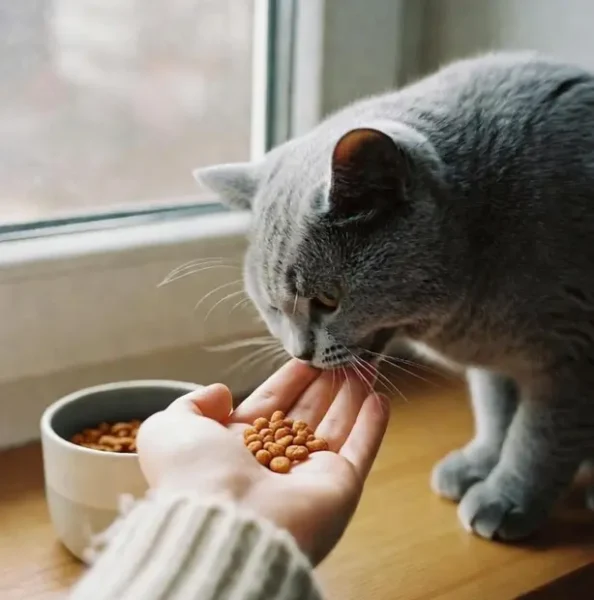
A complete calming strategy must include nutrition. The Gut-Brain Axis is a two-way street: just as stress can upset the stomach, a stressed digestive system can send inflammatory signals to the brain, reducing your cat’s ability to cope.
When a cat’s system is working overtime to process poor-quality or hard-to-digest ingredients, it has fewer resources to cope with environmental stressors.
Why High-Quality Nutrition is a Cornerstone of Calming Care
During times of stress, providing “clean” fuel is essential. This is why choosing a food that focuses on high-quality, easily digestible animal protein and is free from unnecessary fillers (like excess grains or artificial colors) is so important.
Premium nutrition supports total body health—from the digestive tract to the urinary system—ensuring your cat’s body is in peak condition to manage the inevitable stressors of daily life.
Conclusion: Your Calm Home Starts Today
Your cat’s ‘bad habits’ are their way of communicating. They are not acting out to spite you; they are acting out to survive.
You now have the knowledge to decode their signals and a complete ‘Calming Care’ strategy—from enriching their vertical territory to satisfying their inner hunter with interactive play and puzzle feeding.
Start today by observing your cat and adding a little challenge to their day. Explore CHARM® Pet Food’s line of premium cat food as the perfect, supportive element to your new calming strategy.